Blog

 RSS Feed

Category: Training Guides and Ideas

  1. Controlling Your Horse’s Shoulders—and Why It Matters

    Posted on

    Controlling Your Horse’s Shoulders—and Why It Matters

    When we think about steering a horse, it is easy to focus on where the horse’s head and neck are pointing. However, turning the head does not necessarily mean the body will follow.

    The shoulders determine the direction in which the horse’s body travels. If we can influence and control them, we can improve our steering, balance, straightness and the overall quality of the work.

    IMG_8844

    Why is shoulder control important?

    A horse carries more weight through the front of its body. When the shoulders drift away from the intended line, the horse can become unbalanced, crooked or heavy in the rider’s hand.

    Good shoulder control helps with:

    • Riding accurate turns, circles and school movements
    • Keeping the horse straight
    • Improving balance and rhythm
    • Preventing the horse from falling in or drifting out
    • Riding more accurate lines to poles and fences
    • Improving transitions and changes of direction
    • Developing more advanced lateral work
    • Helping the horse use its whole body more effectively

    Shoulder control is important at every level. It is just as relevant when riding a twenty-metre circle or approaching a small fence as it is when working on more advanced movements.

    How do you know when you have lost the shoulders?

    You may notice that:

    • Your circles become smaller or larger than you intended
    • The horse falls in through a turn
    • The outside shoulder drifts out
    • You struggle to ride straight down the centre line
    • The horse bends its neck but continues travelling in a different direction
    • One rein feels considerably heavier than the other
    • Your approach to a pole or fence keeps changing
    • The horse cuts corners or avoids riding deeply into them

    These problems are sometimes mistaken for stubbornness. Often, the horse is simply losing balance or has learned that it can move its shoulders away from the rider’s intended line.

    The rider’s role

    The reins should not be used simply to pull the horse around a turn. Pulling the inside rein can create too much bend through the neck while allowing the outside shoulder to escape.

    Instead, think about creating a channel with your aids:

    • Your inside leg encourages the horse to remain active and helps support the bend
    • Your outside rein helps to guide and contain the outside shoulder
    • Your outside leg supports the hindquarters
    • Your inside rein asks for a small amount of positioning without pulling the neck around
    • Your eyes, upper body and intended line show where you want to go

    Both reins and both legs have a role. The aim is to guide the horse’s whole body onto the chosen line—not just turn its head.

    Exercise: Riding a square

    A simple square is an excellent way to begin improving shoulder control.

    What you will need

    You can ride this exercise without any equipment, or place four cones or markers in the arena to show the corners of your square.

    How to ride it

    1. Begin in walk and ride a large square.

    2. As you approach each corner, look towards the next side of the square.

    3. Ride a clear turn rather than allowing the horse to drift around a curved corner.

    4. Use your inside leg to maintain activity while your outside rein guides the shoulders through the turn.

    5. Straighten the horse after each corner and ride positively towards the next one.

    6. Repeat the exercise in both directions.

    Think of riding four straight lines joined by four deliberate turns. Take your time and concentrate on the position of the shoulders rather than creating a tight or abrupt turn.

    Things to notice

    Ask yourself:

    • Did the horse turn its whole body or only bend its neck?
    • Did either shoulder drift away from the line?
    • Could you ride straight after the corner?
    • Was one direction easier than the other?
    • Did the rhythm remain the same?

    If your horse rushes, loses rhythm or finds the turn difficult, make the square larger. Accuracy matters, but balance and relaxation must come first.

    Making the exercise more challenging

    Once you can ride the square confidently in walk, you can:

    • Ride it in trot with slightly softened corners
    • Add a transition before or after each corner
    • Halt on each side and check that the horse remains straight
    • Change the size of the square
    • Ride a circle between two corners, then return to the square
    • Place poles along one or more sides to improve accuracy

    The aim is not to hold the horse rigidly in place. Good shoulder control comes from clear, coordinated aids that help the horse remain balanced and understand the intended direction.

    Start slowly, notice what happens beneath you and reward the smallest improvement. Once you become more aware of the shoulders, you may be surprised by how many other parts of your riding begin to improve.
  2. Horses and Cheese Wedges....

    Posted on

    What do horses and cheese have in common?


    Calling all riders who ride in a “school”…


    Regardless of what you are doing in the school, I want you to visualise this…..


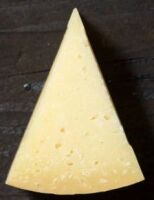
    A cheese wedge! 
    Cheese Wedge


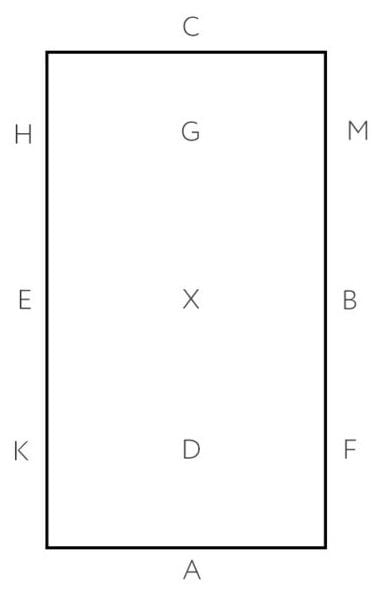
    As the majority of schools are fenced in, or have boards of some sort, the “track” is where we all migrate to, especially if the dimensions of the school are at most 20x40.

     Dressage-Arena-Letter-Layout-1024x962 (2)

    Being on the track is fine, however as your horse – or cheese wedge – is, well, the shape of said cheese wedge, I’ll explain…


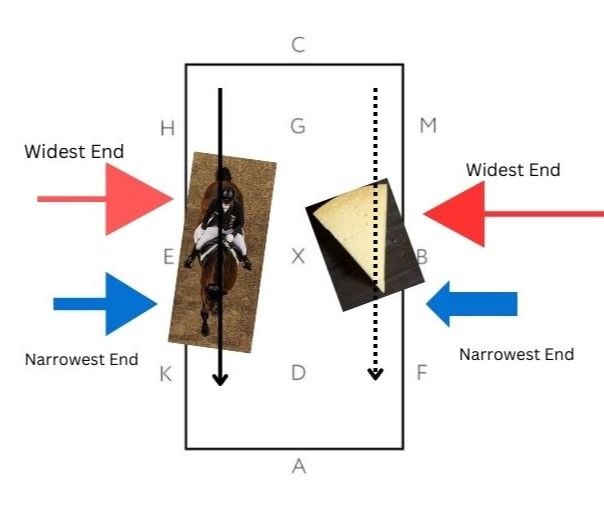
    Viewed from above (like a bird’s eye view) when you look at the dimensions of any horse, you will notice their quarters are wider than their shoulders, and they are wider than the neck/head, hence being “wedge” shaped.

    So, as your horse walks/trots/canters along the track, supported by the fence, his hind legs on the correct track, as are his forelegs, with his neck ahead of all that, you would say he was “straight”, BUT he isn’t. Nope, not one bit. UNLESS you are supporting his shoulders and riding towards a “shoulder fore” shape, THEN he will be straight.

    Look at the diagram below, the “horse” is on the track, as is the “cheese wedge” BUT notice the angle they are both at when allowed to “follow the fence. You should see that when we talk about “straight” we need to fire an imaginary arrow directly through the horse’s nose/chest/dock (tail), with the hind legs stepping into, or over the tracks of the fore feet. When the horse follows the track with no support, the quarters are naturally to the inside, and the horse automatically “falls out” through the outside shoulder.

    cheese wedge and horse

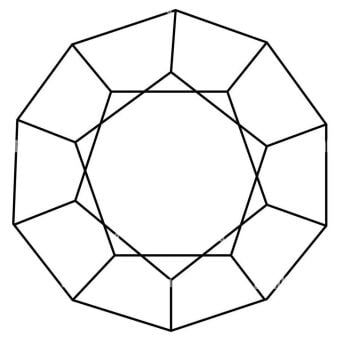
    So? I hear you say. Well, once your horse loses balance, as he will once you turn away from the track, that is when being on the track becomes a problem. The moment you turn off the track, lets say to ride a 20mtr circle in the middle of the school, the problems have already begun, to turn you know HOW to make the turn, (for the purpose of this example I will say you are riding on the right rein), so you put your outside leg behind the girth, you look where you want to go, you use the outside rein and inside for guidance, all theoretically correct, BUT, as you ask your horse to step off the track he feels “stiff” or “wooden” or likewise, and it is like turning a ship! Your first ¼ of the circle is wobbly at best, the horse is out of balance, flexing at the poll, NOT bending through his body, (looking the right way but that’s all) and your circle resembles a dodecahedron!

    dodecahedron

    But I rode it “right”, so why have I managed to invent a new type of move?!


    Well, it is easy, because you were on the track, the horse’s quarters were already on an inward incline, his outside shoulder was loaded and he was anything BUT straight to begin with, you then asked him to create a shape which his body was simply unprepared for. He was effectively going left while you were going right!

    So, lets rewind this and look at how your horse could have achieved what was required.

    You are riding down the long side, BUT you have his shoulders and body straight, his quarters are following his forelegs, his shoulder is not glued to the fence and to achieve that, you have already created a small amount of bend around your inside leg, SO, you approach your circle in the middle, you ride it EXACTLY the same as previous, BUT this time your horse already has balance, straightness and is capable of bending the correct way. This creates a perfectly formed circle which has no straight sides or looks like a drunk squirrel was in charge of the reins!

    All this began BEFORE THE CIRCLE, by being aware of your horse’s shoulders not being on the track!

    As a matter of course we should all ride on the inner track for periods of time, not sure how far in? Well, imagine you have a friend riding at the side of you, but they are on the track, you are on the inside of them, this will highlight how much you MUST support the outside of your horse, it is not just about the inside of them, the outside is equally important. You will also feel how much your horse migrates back to the track!

    Riding circles in open areas is also a great highlighter of the outside support, your inside leg is for the horse to bend AROUND your OUTSIDE aids create the bend.

    This is not only important for flatwork but also jumping, I categorically guarantee your horse will jump better once you sort the cheese wedge out. I promise.

     Happy Riding peeps, remember, stay off the track!